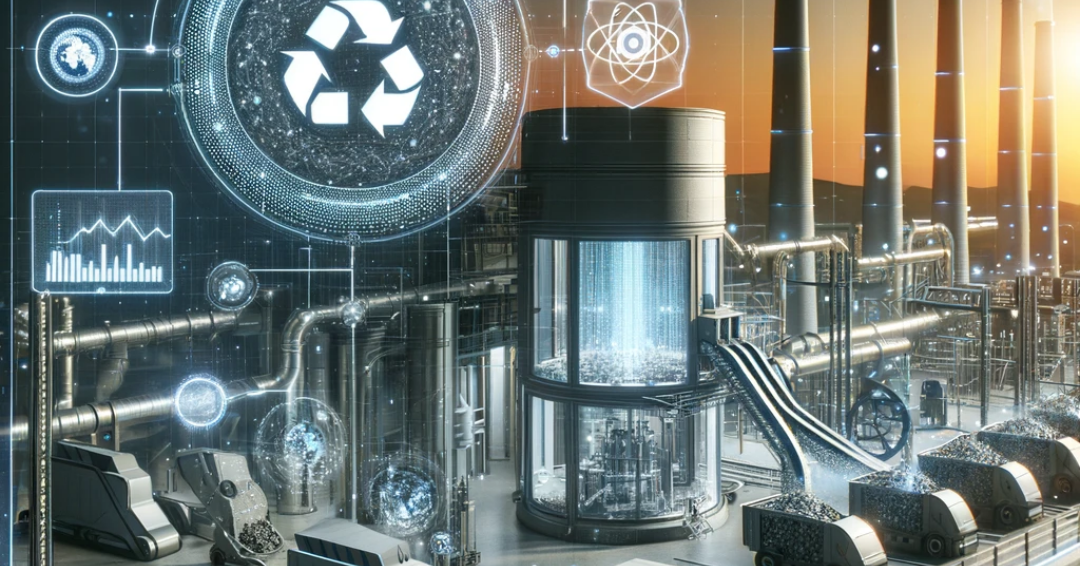
In the search for sustainable energy solutions, biowaste represents a promising alternative to fossil fuels. Artificial Intelligence (AI) is at the forefront of redefining the efficiency and sustainability of energy generation from biowaste.
Optimizing Anaerobic Digestion with AI
Anaerobic digestion, one of the key methods for converting biowaste into energy, involves breaking down organic material in the absence of oxygen to produce biogas. This biogas can be used to generate electricity, heat, or fuel.
However, the efficiency of anaerobic digestion is influenced by several factors, including the composition of the biowaste, temperature, and pH value. This is where the potential of AI becomes clear: through real-time monitoring and data analysis, AI algorithms can optimize these conditions and significantly increase biogas production. By predicting the optimal feedstock composition and adjusting process parameters in real time, AI helps ensure that anaerobic digesters operate at maximum efficiency.
AI in Monitoring and Preventive Maintenance
The use of AI extends beyond process optimization and also includes the monitoring and predictive maintenance of biowaste-to-energy plants. Sensors equipped with AI capabilities can continuously monitor plant conditions, processing parameters, and energy production.
This data, analyzed by machine learning algorithms, can predict potential failures and maintenance needs, minimizing downtime and extending the service life of the plant. The result is a more reliable and efficient process for converting biowaste into energy, capable of adapting to changing conditions and preventing costly interruptions.
AI-Driven Solutions for Feedstock Management
One of the challenges in converting biowaste into energy is managing the variability and quality of feedstock. AI addresses this challenge by analyzing historical data on material properties and process outcomes to predict the best feedstock mixtures.
These predictive analyses ensure a consistent, high-quality input for energy production and help maximize output.
Enhancing Sustainability Through AI
Beyond improving efficiency, AI plays a crucial role in enhancing the sustainability of biowaste-to-energy processes. By optimizing energy generation and reducing emissions, AI contributes to a cleaner and more sustainable energy future.
In addition, AI-powered analyses can assess the environmental impact of converting biowaste into energy, helping plants minimize their emissions footprint and align with global sustainability goals.
Looking Ahead: The Role of AI in the Circular Economy
The integration of AI into biowaste-to-energy conversion is a step toward a circular economy, where waste is not seen as an endpoint but as a resource for new production.
AI strengthens the circular economy by enabling more efficient conversion processes, reducing dependence on fossil fuels, and supporting the recycling of nutrients and organic matter back into the cycle.
Conclusion
In summary, the role of AI in converting biowaste into energy is multifaceted. It offers solutions for optimizing conversion processes, ensuring the sustainability of operations, and supporting the transition toward a circular economy.
Looking ahead, the continuous development and integration of AI technologies in biowaste-to-energy conversion promise to unlock new potential in sustainable energy generation, making it an essential pillar in the global pursuit of clean, renewable energy sources.
For companies like WasteAnt, the use of AI means not only taking a leading role in innovation but also playing a key role in the sustainable transformation of our energy systems.

Wir entwickeln KI-basierte Lösungen zur Analyse und Bewertung unstrukturierter Abfallströme. Unser Ziel ist es, Transparenz zu schaffen, Prozesse zu optimieren und Abfall als wertvolle Ressource nutzbar zu machen.

Kofinanziert von der Europäischen Union.
Das Forschungsprojekt "Differenzierung von biogenem und fossilem CO2" und das Kooperationsprojekt "Optimierte Regelung von Müllverbrennungsanlagen" werden gefördert von der BAB und der Senatorin für Wirtschaft, Häfen und Transformation.